
DEFENCE
&STRATEGY
/CONFERENCE
2026
20 - 22 MAY 2026
PRAGUE, CZECH REPUBLIC
HOTEL DAP
VÍTĚZNÉ NÁMĚSTÍ 684/4
THIS YEAR'S TOPIC
ADAPTING
TO A CHANGING WORLD
The conference will examine how defence and security communities are responding to a rapidly evolving strategic environment by focusing on the adaptation of military capabilities in the 21st century. It will explore the impact of emerging technologies, autonomy and digitalisation on the future battlefield, and consider how armed forces can integrate innovation while managing new operational and ethical challenges. A further core strand will address societal resilience, governance and the information environment, including the growing importance of strategic communication and resilience against disinformation. The conference will also highlight the industrial and economic dimensions of defence—covering issues such as capability development, supply chains and defence investment—and will discuss ways to strengthen the European pillar within NATO in order to enhance collective deterrence, interoperability and burden-sharing.
ABOUT
DEF&STRAT/CON
The Defence and Strategy conference is a platform for experts, military professionals, and academics focused on defense and security. Organized by the Centre for Security and Military Strategic Studies, University of Defence.
The conference provides a space for the exchange of knowledge, experience, and the latest research in the field of strategic studies, military art, defence and international relations.
ABOUT ORGANIZATOR
CENTRE FOR SECURITY
AND MILITARY STRATEGIC
STUDIES
Centre for Security and Military Strategic Studies (CSMSS or Centre) is a university educational, research, and expert workplace of the University of Defense. The mission of the Centre is to carry out educational, research and expert activities to ensure the state’s defence while respecting the requirements of the MoD department and academic freedoms.


The Centre provides the Senior Officers Course, General Staff Course, and Professional Training Courses. Educational activities are ongoing within the framework of university studies or lifelong learning for both national or international public administration personnel, civilian and military experts acting in the area of defence and strategic decision-making.
Centre conducts applied research and expert activities in security and military-strategic studies, producing strategic studies, concepts, analyses, and forecasts tailored to the Ministry of Defence’s needs. Centre is also editing two academic journals, Obrana a strategie and Vojenské rozhledy, both listed in Web of Science and Scopus databases.
EXPERTISE
The Centre maintains consultation support and expert and advisory activities in defence and security. Centre members present their expert contributions in the media and participate in editorial boards, NATO SAS panels or national and international expert groups.
PREVIOUS CONFERENCE EDITIONS


SPEAKERS 2025


Prof. János Besenyő
University of Óbuda
Dr. Tomáš Kolomazník
Metropolitan University Prague
Professor Dr. János Besenyő is a professor in the Óbuda University, Donát Bánki Faculty of Mechanical and Safety Engineering (Hungary) and head of the Africa Research Institute. He is also visiting professor of the Centre for Military Studies (CEMIS) in Stellenbosch University. Between 1987 and 2018, he served as a professional soldier and served in several peace operations in Africa and Afghanistan. He received a PhD in military science from Zrínyi Miklós National Defense University (Hungary) and he received a habilitated doctorate at Eötvös Loránd University (Hungary). In 2014, he established the Scientific Research Centre of the Hungarian Defence Forces General Staff, and was its first leader from 2014 to 2018. His most recent publication is Conflict and Peace in Western Sahara The Role of the UN's Peacekeeping Mission (MINURSO). https://orcid.org/0000-0001-7198-9328
Tomáš Kolomazník spent a significant part of his career at the Ministry of Defence of the Czech Republic, working in the Department of Defence and Security Policy. After leaving public service, he turned his focus to security consulting and market research. Together with a colleague, he founded the company Center for Security Consulting. The company’s vision is to bridge academia, public administration, and the private sector in the field of security. Its clients are based not only in Europe but also in the United States. In addition to his consulting work, he teaches at the private university AMBIS and at CEVRO University. He is currently also a PhD student at the Metropolitan University Prague. His research focuses on information operations, strategic communication, and other security-related topics. He is the co-author of the book “Why Do We Believe Disinformation?”, published both in the Czech Republic and in London.

Zdeněk Rod, Ph.D.
University of West Bohemia in Pilsen
Zdeněk Rod is an assistant professor at the University of West Bohemia in Pilsen, Department of Politics and International Relations, and at CEVRO University in Prague, Department of Security Studies. Zdenek also serves as Co-Director of the Centre for Security Consulting in Prague and is a Visiting Fellow at John Lukacs Institute for Strategy and Politics at the University of Public Service in Hungary. Zdeněk holds a Ph.D. degree in International Relations with a specialization in Security & Conflict Resolution. He is also a member of various think tanks and institutes such as CEVRO University Center for Security Studies (CEBES) or Central European Institute of Asian Studies (CEIAS) or TOPAZ. Zdeněk's expertise lies in security studies, conflict resolution, hybrid threats, and strategic communication. His academic journey has included studies at universities in Ljubljana and Budapest and the European Security and Defence College in Brussels. He has undertaken research visits, including one to the NATO CIMIC Centre of Excellence in The Hague. Before his academic pursuits, Zdeněk contributed to the Czech Ministry of Defence, bringing practical experience to complement his scholarly endeavours. He has a rich publication history, having authored and co-authored several academic articles, chapters and books (e.g. Oxford, Taylor & Francis, Wiley, Routledge, Palgrave and Macmillan publishers) and policy articles (e.g. RAND, SAIS Review of International Affairs, Defence News, The Diplomat). His contributions extend to active involvement in national and international research projects.

BG (Ret.) František Mičánek, Ph.D.
CEBES – Centre for Security Studies, CEVRO Institute
František Mičánek is the Executive Director of the Center for Security Studies (CEBES). He specializes in state defence and the theory of war, the role of the armed forces within the Czech security system, the development of security infrastructure, and cooperation with international organizations such as NATO and the EU. He spent most of his professional career in the Czech Armed Forces, where he held a range of leadership positions in air defence units, including participation in the SFOR mission and senior roles in defence planning at the Ministry of Defence. He completed strategic-level training at the U.S. Air War College in Alabama. He has received multiple awards for his service, including medals from the Czech Army and NATO.

Artúr Nagy
University of Jan Evangelista in Ústí nad Labem
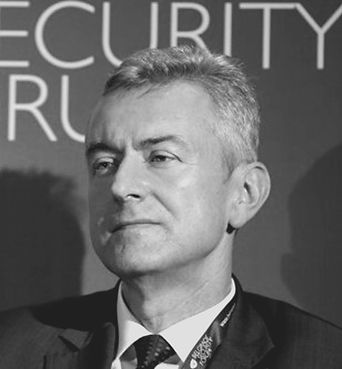
Artúr Nagy is a Ph.D. candidate at the University of Ústí nad Labem (UJEP) in the Czech Republic, originally from Hungary. His research focuses on Soviet and Russian military operations in various regions, particularly at the tactical level. He has conducted extensive historical and contemporary research on both Russian and Ukrainian armed forces. He has had the honor of presenting his work to the Hungarian Ministry of National Defense and its research group focused on the Russian-Ukrainian war, and has published on the topic through the National University of Public Service.
_edited_edited_edited.jpg)
prof. Artur Gruszczak
Jagiellonian University
Artur Gruszczak is a Professor of Social Sciences, Chair of National Security at the Faculty of International and Political Studies, Jagiellonian University in Krakow. He held NATO Research Fellowship for the Study of Democratic Institutions, and was a co-coordinator of the project “NATO’s New Strategic Concept 2010”. His principal interests and research areas include: transformation of war and the future of warfare; European and transatlantic security; European intelligence cooperation. He published extensively on these topics. Recently he co-edited with Sebastian Kaempf Routledge Handbook of the Future of Warfare (Routledge 2024).

Josef Myslín, PhD.
CEVRO Institute
Josef Myslín studied information technology, systems engineering, civil protection, education, and management. In his professional work, he focuses on integrating these fields. He works as a lecturer at the Department of Security Studies at CEVRO University. His areas of expertise include the use of information and other technologies in the field of security, as well as modeling (process, structural, etc.), planning, and management in the context of security, crisis management, and civil protection. He also contributes to a public education project aimed at improving preparedness for emergencies.

dr. Tomasz Klin
University of Wrocław
Dr. Tomasz Klin, assistant professor in the Institute of Political Science at University of Wroclaw. His main research interest is international politics, specifically: geopolitics, spheres of influence, interstate subordination, as well as international security issues, namely: Central & Eastern European and NATO eastern flank countries towards Russia's expansion. He publishes in international academic journals: Political Studies Review, Croatian International Relations Review, Przegląd Zachodni - Western Review; Lithuanian Annual Strategic Review, Yearbook of the Institute of East-Central Europe. His newest publication is: T. Klin (2025): Measuring Central and Eastern European Countries’ Responses to Russia’s Invasion of Ukraine, Central European Journal of International and Security Studies 19(1).
Yurii Punda, Doctor Hab.
Military Institute of Taras Shevchenko National University of Kyiv

Yurii Punda earned a Strategic Level Master's Degree in “Management in the military sphere” at the National Defense Academy of Ukraine and master degree at NDU of the USA. In 2014, he defended his postdoctoral thesis (habilitatus) on strategic management in the defence sphere. In 2020 – 2022 he occupied the position of Defense Policy Directorate General Director in MoD of Ukraine. His research and educational activities are focused on national security and military strategy, education management and leadership development within the Professional Military Education. He is also focusing on hybrid threats, russia’s policy and strategy.

Vira Konstantynova
Center for Geopolitical Studies “KONSTANTA R&D GROUP”
Vira Konstantynova is a strategic affairs and security policy expert specializing in Ukraine’s foreign policy, wartime diplomacy, and international security cooperation. With over a decade of experience in international relations and geopolitical risk, she has advised top-level leadership during one of the most critical periods in Ukraine’s modern history. Her core competencies include national resilience policy, energy security, hybrid threats, strategic communications, wartime diplomacy, and crisis negotiations. She served as Foreign Policy Advisor to the Chairman of the Parliament of Ukraine, providing strategic counsel on inter-parliamentary cooperation. Her career spans several positions within the Ministry of Foreign Affairs of Ukraine, the Verkhovna Rada of Ukraine, and the Udovenko Diplomatic Academy of Ukraine. Since 2024, Vira has been leading the Center for Geopolitical Studies ‘KONSTANTA R&D Group’ as its Director. She delivers guest lectures at leading foreign research and training institutions in diplomacy and defense. Mrs. Konstantynova holds an M.A. in International Relations from Odesa I.I. Mechnikov National University. She is an alumna of the British Council’s Future Leaders Connect, the LEADx Change Program, and the German Marshall Fund’s Policy Designers Network. She is also a graduate of the UNITAR Women for Peace – Emerging Leaders Program.

Veronika Hornyák Gracza
Ludovika University of Public Service, Budapest, Hungary
Veronika Hornyák Gracza is a PhD candidate at the Doctoral School of Military Sciences of the Ludovika University of Public Service and a Doctoral Fellow of the Doctoral School on Common Security and Defence Policy within the European Security and Defence College. Her area of expertise is European security and defence policy, with special focus on EU-led peacebuilding and crisis management missions. Mrs. Hornyák Gracza holds a bachelor’s degree in International Public Administration and master’s degrees in International Public Service Relations and International Security and Defence Policy from the University of Public Service, Budapest. Additionally, she has a postgraduate degree in Sports Diplomacy from the Széchenyi University of Győr. Most recently, Mrs. Hornyák Gracza was a Fulbright scholar at American University in Washington D.C., where she pursued a graduate certificate program and conducted research at the Transatlantic Policy Center.
BG Radek Haratek, M.S.
Cyber and Information Warfare Command
William Liffick
Littoral Dynamics

Natália Sabol Tkáčová
Friedrich Naumann Foundation
Natália Sabol Tkáčová works as Project Manager for Friedrich Naumann Foundation office in Prague. She is a Slovak expert in disinformation, hybrid threats, and foreign malign influence, focusing on Central Europe. She holds two Master's degrees in International Relations (Matej Bel University in Banská Bystrica, Slovakia, and Metropolitan University Prague, Czech Republic). Her commitment to security has been reinforced by specialized security (PSSI, Adapt Institute, OSCE/UNODA) and diplomatic (Štefan Osuský Summer School) trainings. She is also the Transatlantic Security Initiative IV fellow and the OSCE Pool of Young Experts member. Ms Tkáčová has published several papers on information security (Disinformation on Telegram in the Czech Republic: Organizational and Financial Background; Istanbul Convention in the Czech Republic: Debate Dynamics, Key Actors, and Communication Recommendations; and more) and has appeared on the Infosecurity.sk podcast. She is fluent in Slovak, English and Spanish.

dr. Michal Piechowicz
Nicolaus Copernicus University in Torun
His research interest focuses on issues related to the decision-making processes and NATO / EU defence and security policy issues. My ongoing and future-oriented goal is to establish research and trust-based links with partners dedicated to Central European studies who are interested in joint research projects within NATO or CSDP, including issues like EDF, PSECO or a comprehensive approach to the European Security Architecture, including joint actions on national and supranational levels. I'm also interested in the macro-regional sphere of the Arctic and this region's security-related aspects.
Jarosław Tokarczyk
NATO DEEP eAcademy

As a Public Relations Specialist at NATO DEEP eAcademy, he leads and supports strategic communication and international outreach initiatives. He collaborates with the Polish Association for Security on education projects, combining expertise in digital media with a deep understanding of defense education. He has completed certified training in social media, virtual reality in education, and multimedia design. As a Subject Matter Expert, he contributes to NATO DEEP workshops on digital learning. His academic interests focus on neurocognitive science, with research conducted on stress responses in virtual reality environments and the therapeutic applications of immersive technology.
_edited.jpg)
dr. Wojciech Kazanecki
Institute of Political and Administrative Sciences, Wyższa Szkoła Kształcenia Zawodowego
Dr Wojciech Kazanecki specializes on geopolitical analysis of current world affairs. He is currently an Assistant Professor at the University College of Professional Education in Wroclaw. Between 2004-2014 he has established and led Lower Silesian Centre of Strategic Studies (DOSS) – regional think tank devoted to global and local affairs. Between 2010-2018 he was he was a visiting lecturer of ICN Business School Nancy-Metz (France). He worked for local self government as Director of Regional Policy Unit, and then, for more than 12 years, he worked for a leading global consulting firm as a manager. He is also a member of the Forecasting Committee of the Polish Academy of Science (since 2011). Full list of publications and additional information is available at his blog: kazanecki.wordpress.com

Assoc. Prof. Josef Procházka
Director of Centre of Security and Military Strategic Studies, University of Defence
Josef Procházka is the Director of the Center for Security and Military Strategic Studies at the University of Defence in Brno. Born in 1966 in Brno, he graduated from the Antonín Zápotocký Military Academy with a specialization in tank and automotive technology. His military career included service in technical and logistical support roles, staff functions at the General Staff and Ministry of Defence in logistics and acquisition, and assignments in the SFOR and EUFOR missions in Bosnia and Herzegovina. He also served as Defence Adviser to the Permanent Delegation of the Czech Republic to NATO between 2011 and 2014. A graduate of the doctoral programme in State Defence Management and the General Staff Course at the University of Defence, he completed study stays abroad focused on logistics, resource management, security policy, and strategic governance. In 2019, he earned his habilitation with a thesis on strategic approaches to armed forces adaptation and development strategy
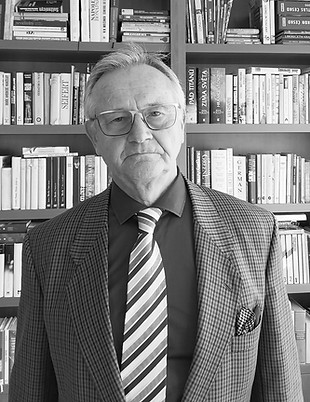
Petr Krajáč, PhD.
Department of Applied Social Sciences and Humanities, University of Defence
Doctor Krajáč is an academic staff member at the University of Defense in Brno. He is a graduate of the Military Academy in Bratislava, specializing in social sciences. He holds a degree in philosophy and has been devoted to educating both military and civilian professionals in the fields of management, leadership, military, and business ethics. Since March 2022, he has been focusing on axiological research on the war in Ukraine, emphasizing Russian traditional state aggression. He is also interested in the relationship between the development and application of artificial intelligence and the defense capability of our country.
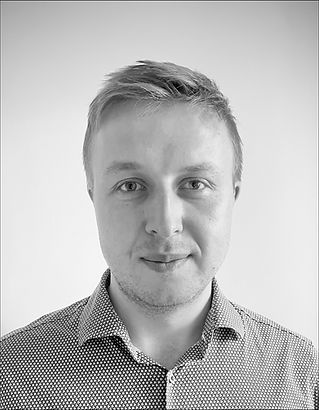
David Mareček, Ph.D.
Metropolitan University Prague
David Mareček is an Assistant Professor at the Department of International Relations and European Studies at the Metropolitan University Prague. He holds a Ph.D. in History from the University of Hradec Králové. His academic interests include U.S. foreign policy, the Cold War, Euro-Atlantic relations, the European Union, the American political system, and the theory of ontological security. He has studied and conducted research abroad, including academic stays at Eötvös Loránd University in Budapest and Missouri Southern State University in the United States. He is the author of several scholarly articles, such as "Bush’s ‘Beyond Containment’ Strategy toward the Eastern Bloc in 1989 within the US Foreign Policy Context", "The Path to the Unexpected Partnership of Nixon and Kissinger in 1969", and "U.S. Foreign Policy toward the Eastern Bloc during the Polish and Hungarian Uprisings". He has also been involved in research projects focused on U.S. diplomacy toward Hungary during the era of détente (Budapest, 2020), Henry Kissinger’s NATO policy (Brussels, 2021), and the impact of Ostpolitik on Euro-Atlantic relations (Berlin, 2022).
Captain Thomas Hader
US Marine Corps
Miroslav Plundrich, Ph.D.
University of West Bohemia in Pilsen
William is a former U.S. Coast Guard Special Operations Officer renowned for expertise in maritime counter terrorism, intelligence, and transnational crime. William spent most of his career in Special Operations combating Maritime Counter Terrorism and securing critical infrastructure before transitioning to military intelligence. Working closely with the Intelligence Community, he leveraged joint capabilities and a multi-billion-dollar asset registry to enhance operational effectiveness in high-risk environments. Specializing in special operations integration in Central and South America, he led efforts to disrupt transnational crime and enhance regional stability with 30+ nations. He earned accolades and underscored the military’s vital role in safeguarding national interests and protecting critical infrastructure. William holds a Master’s Degrees in International Relations and Global Security and other certificates from the U.S. Naval War College, NATO, and Texas A&M Bush School of International Affairs. He remains passionate about advancing security initiatives and shaping international strategic policies as an instructor at the NATO School Oberammergau teaching Maritime Counter Terrorism and as a contributing author to NATO’s Counter Terrorism Reference Curriculum (source: https://shorturl.at/TMSbW).
